Keynote Speakers
(Listed in alphabetical order by last name)

Dr. Craig A. Davis
Department of Water and Power (LADWP), US
Craig A. Davis, PhD, PE, GE, is a professional consultant on geotechnical, earthquake and lifeline infrastructure system resilience engineering. During his 31.5-year career at the Los Angeles Department of Water and Power, Water System (LADWP), he worked as the Departmental Chief Resilience Officer, Resilience Program Manager, Seismic Manager, Geotechnical Engineering Manager and Trunk Line Design Manager. Dr Davis developed a comprehensive LA Water System resilience program and is involved in creating policy for improving infrastructure systems to threats and hazards. He has worked on numerous infrastructure projects and served on many national and international committees. He is the founding Executive Committee chairperson for the ASCE Infrastructure Resilience Division. He is a founding member of the Lifelines Advisory Panel for the NIBS Lifelines Infrastructure Hub. He currently serves on the EERI Board of Directors. Dr Davis is a founding vice president of the ISLIEE. He has been honored with several prestigious professional awards.

Prof. Hong Guan
Griffith University, Australia
Hong Guan is a Professor of Structural Engineering at Griffith University and Research Leader at the Griffith Institute for Human and Environmental Resilience. She is the Node Leader and an Executive member of the Australian Research Council (ARC) Industrial Transformation Research Hub (Advance Timber Hub), and an Executive Committee Member of the Australian Network of Structural Health Monitoring (ANSHM). Since 2024, she has served as a member of the ARC College of Experts. She is also an Editor of the journal Construction and Building Materials. Her current research focuses on the progressive collapse resistance of concrete flat plate structures, robust mass timber buildings and connection beahviour under high-strain rate loading, structural health monitoring, and infrastructure asset management. She has authored 390+ publications, including two editions of “Earthquake Disaster Simulation of Civil Infrastructures”, which received the Springer Nature 2022 China New Development Award, and 180+ journal articles published in leading international journals.

Prof. Yasuko Kuwata
Kobe University, Japan
Yasuko Kuwata is a Professor in the Department of Civil Engineering at Kobe University. Her research focuses on lifeline earthquake engineering, particularly the seismic design and mitigation of buried pipelines. After the 1995 Kobe earthquake, she pursued earthquake engineering at Kobe University and later earned her doctoral degree. She has extensive experience with soil–pipe interaction studies, including large-scale loading tests using soil tanks and numerical response analyses, which have contributed to improved understanding of pipeline behavior during earthquakes and to more rational seismic design approaches. In recent years, she has advanced research on opticalfiberbased monitoring technologies for buried pipelines, developing new methods for infrastructure condition assessment and enhancing seismic resilience.

Prof. Anastasios Sextos
University of Bristol, UK
Anastasios Sextos is Professor of Earthquake Engineering at the University of Bristol and Director of the Laboratory of Earthquake Engineering at the National Technical University of Athens on a dual appointment. In Bristol, he led the design and delivery of the £12 million Soil–Foundation–Structure Interaction (SoFSI) Facility, acted as the Head of the Earthquake and Geotechnical Engineering Research Group, founded the MSc in Earthquake Engineering and Infrastructure Resilience, and served on the UKCRIC Management Board. Between 2011 and 2026, he secured 37 internationally funded research grants. He leads the EPSRC project on Seismic Resilience of Schools in Nepal, which delivered the world’s first building on a low-cost PVC-based seismic isolation system, awarded by ASSiSi. He serves on the European Structural Eurocodes Project Team and chairs Greece’s National Pre-Earthquake Assessment Committee. He has authored 110+ journal papers (94% Q1, h-index 44 GS, 38 Scopus) on seismic resilience of critical infrastructure.

Prof. M. Hesham El Naggar
Western University, Canada
Hesham El Naggar is a Distinguished University Professor and a world leader in foundation dynamics and geotechnical earthquake engineering. He is an elected Fellow of the Canadian Academy of Engineering, the Engineering Institute of Canada and the American Society for Civil Engineers. He is Editor-In-Chief of International Journals of Soil Dynamics and Earthquake Engineering, and Urban Resilience and Earthquake Engineering. He advanced the state-of-the-art in the analysis and design of foundations for dynamic loads. He published more than 800 technical papers and book chapters, including 525 papers in selective and prestigious journals (19400 citations, H71, i380). Dr El Naggar graduated more than 180 PhD and Master students. In recognition of his outstanding research contributions, He received many prestigious awards, including the Cross-Canada Lecture Tour, Geosynthetics, Meyerhof and Canadian Geotechnical Colloquium Speaker Awards from the Canadian Geotechnical Society and the Ontario Professional Engineers Medal for Engineering Research & Development.
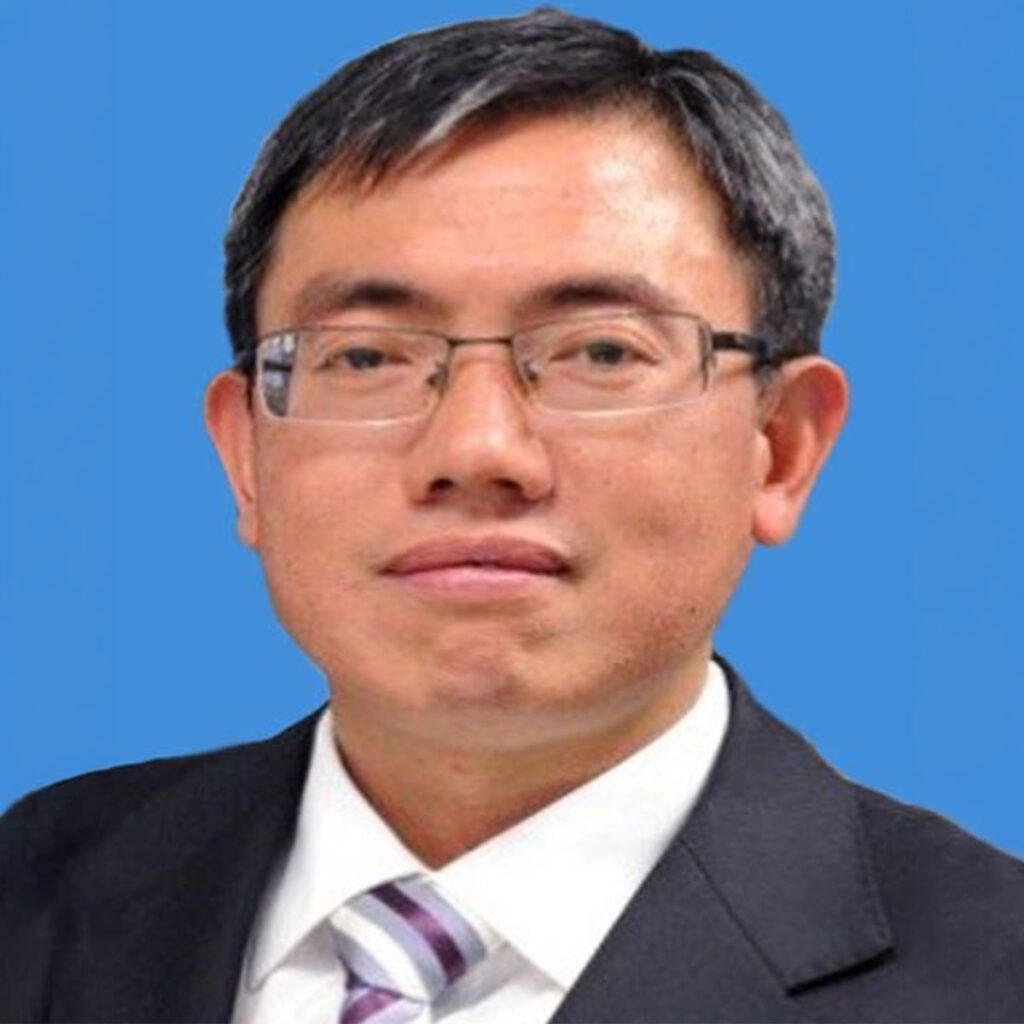
Prof. Qiang Han
Beijing University of Technology, China
Qiang Han is a professor at Beijing University of Technology and Deputy Director of the State Key Laboratory of Bridge Safety and Resilience. He currently serves as Vice Dean of the College of Architecture and Civil Engineering, and Director of the Institute of Road and Bridge Engineering. He is mainly engaged in teaching and research in the fields of intelligent bridge construction, safety operation and maintenance. He concurrently serves as a member of the council of the International Society of Lifeline and Infrastructure Earthquake Engineering, a member of the council of the Earthquake Disaster Mitigation Engineering Branch of the Chinese Civil Engineering Society and the Intelligent Transportation Construction Branch of the China Highway Society. He is an associate editor of journals such as the China Journal of Highway and Transport. He has authored 5 monographs, published more than 260 SCI-indexed papers, and obtained more than 120 national patents. He has been a highly cited researcher by Elsevier for the past three years.

Prof. David Lau
Carleton University, Canada
David Lau, P.Eng, FCSCE, Professor of Civil Engineering, Ottawa-Carleton Multi-Hazard Research Centre, Director, Carleton University, Canada, has been involved in and led large-scale national and international collaborative research projects on seismic analysis and design, retrofit and structural health monitoring of structures. His current research interests are focused on multi-hazard resilience of critical infrastructure, seismic performance of operational and functional (non-structural) components in buildings, and large-scale experiment techniques.